|
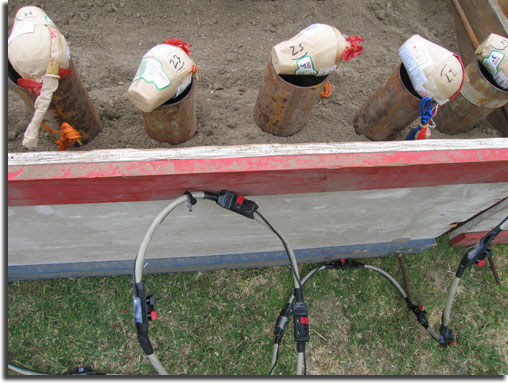
A typical pinboard style field module will consist of these main parts:
Cue Terminals
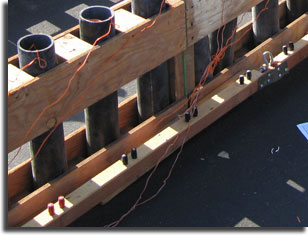
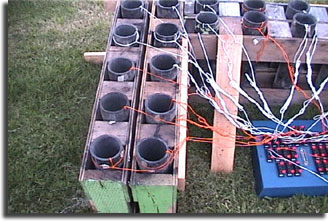
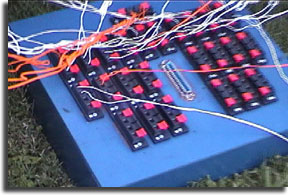
Each field module will have a number of cue terminals, the number depending on the firing system design. Each terminal is typically a stereo speaker type of connector with a red and black terminal. There are a few other variations of cue terminals; however, this also depends on the firing system design. The electric match attached to the firework plugs directly into these terminals.
Firing Cable Interface
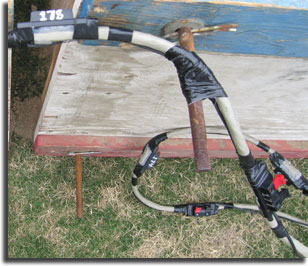
The interface can consist of just a loose cable end hanging out of the firing control module, or more commonly, a connector which sits flush on the face of the module, very similar to the firing board. For the case of the cable slave, it has a 25 pair amphenol connector at each end. It doesn't matter which end is plugged into the firing cable. The advantage of being able to interface to it at either end is that you can maximize distance between your firing board and your fireworks setup by plugging in the end which is closest to the firing board. This also means you can string them end to end if you have fireworks that need to fire simultaneously from multiple positions on the same cue.
Ground Terminals
You will typically have a simple screw terminal which a ground wire will attach. Some firing systems are internally grounded through the firing cables and do not require this extra ground line. It is very important to redundantly ground your firing system!
Take me back to the electrical firing section. |  Field Modules