

Take me back to what to know your first fireworks show
Electrical Firing
Electrically fired displays bring a few variables into the equation. By firing each device electrically, you have better control over exactly when each will fire, as opposed to a hand fired display in which delays in the quickmatch or fusing can cause unwanted gaps in your show. In an electrically fired display, each device is rigged with an electric match which can be initiated with a pyrotechnic firing system.
Electric iginition increases the level of safety for the pyrotechnics crew discharding the display, being that they no longer need to be right up next to the fireworks they are setting off, as they would be during a manually fired display that uses torches or roadflares to ignite each match.

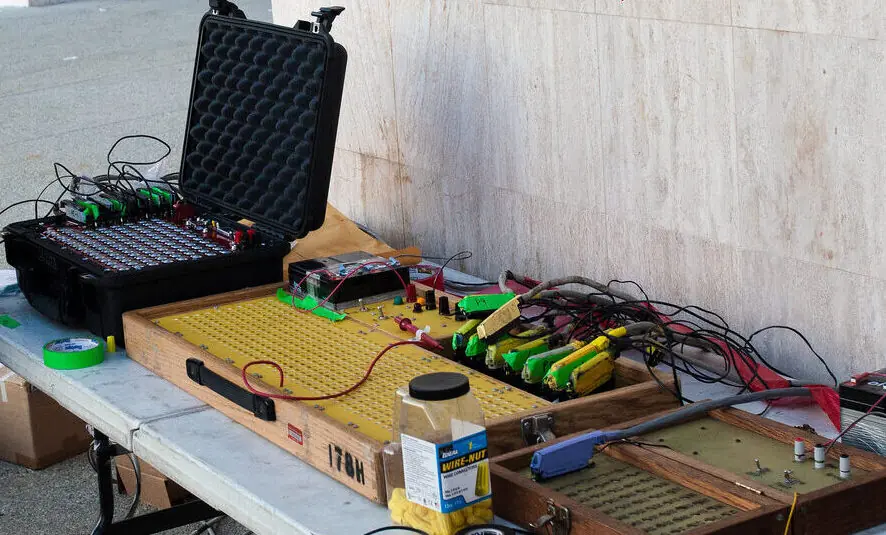
Three different analog firing systems. System on the left uses mechanical push buttons, the system in the middle and the one on the right use metal contacts and a stylus, and the system on the far right is internally grounded and therefor doesn’t have an external ground, see the difference?

Firing Control System
A typical firing controller will consist of these main parts:
Firing Contacts
The firing contacts can be in the form of a mechanical switch, a pushbutton, a pin (or a circular metal contact) that you touch with a “stylus.”
Battery Interface
Each firing system is battery powered. They can come in different voltages; however, a 24 volt system is very standard. The batteries may be internal or external depending on the system. If the batteries are external, there will be a positive and negative terminal on the firing controller to attach the battery. Since batteries typically don’t come in 24 volt sizes, two 12 volt batteries tied in series are used. Always connect the wires to the board first, then the battery.
Ground Terminals
Some systems are grounded through the firing cables by using some of the wires inside the cable as ground, which gives the advantage of eliminating the need for the operator to worry about grounding the system. The disadvantage to this is that you loose a few cues per cable, reducing the overall number of cues your system can fire, and can make it difficult to redundantly ground a system. Other systems, simply have ground terminals on each field module, and ground terminals on the firing control module that must be connected via long lengths of wire. A compromise to both types of systems is having a system similar to the second one described above, with the addition of a wire secured to each firing cable to be used as ground. This way you don’t loose any cues, and you don’t have to run ground wire each time.
Firing Circuit
The firing circuit of your typical analog system will consist of a few arming switches, an indicator light, and a path from the batteries to the electric matches you are trying to shoot.
Continuity Circuit
The continuity circuit for a firing system is designed to send a very low amount of current through each electric match to give you indication that the system “sees” the electric match, and that you have a complete circuit. Continuity systems will typically have a currently limiting device to ensure a current well below the ematch no-fire current is applied, a switch, and an indicator light/speaker.
Field Modules
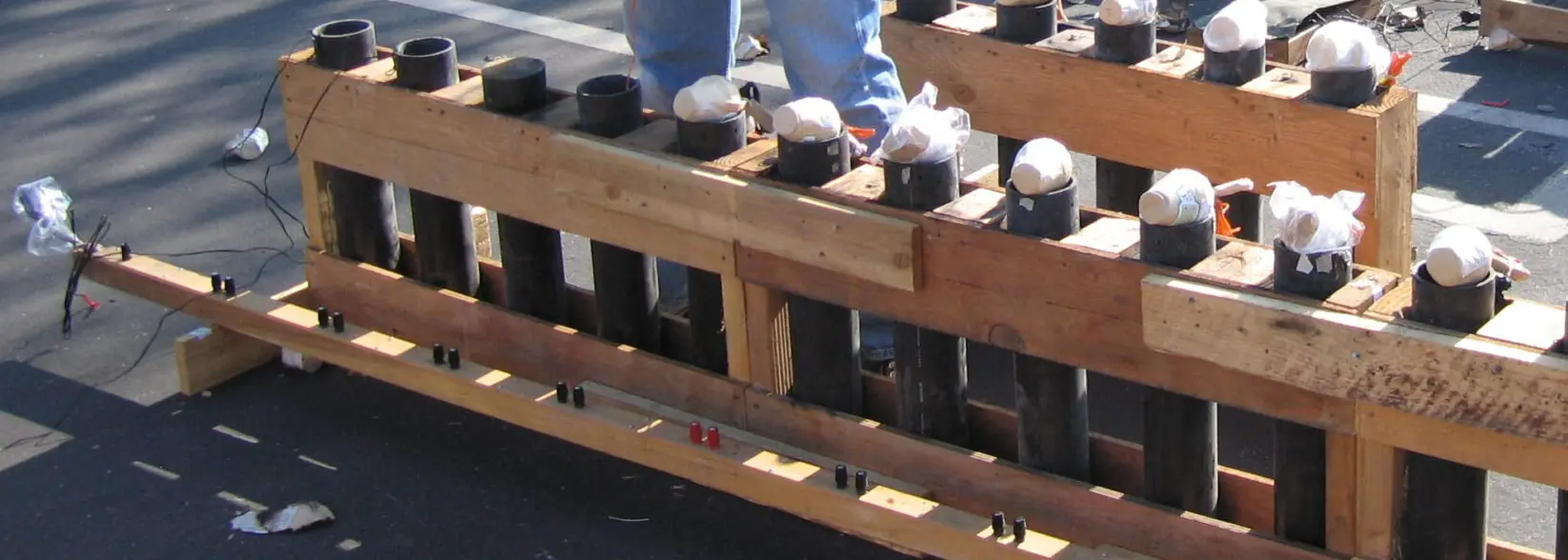
Field modules come in many different forms. The most common are “box” type and “rail” type. Box type is pretty self explanatory, being a small box with cue terminals. The box is good for groups of mortars, or a group of low level devices such as cakes. A rail type can be a hardwood, fiberglass, or a more flexible cable rail, with cue terminals a measured distance apart.
Cue Terminals
Each field module will have a number of cue terminals, the number depending on the firing system design. Each terminal is typically a stereo speaker type of connector with a red and black terminal. The electric match plugs directly into these terminals.
Firing Cable Interface
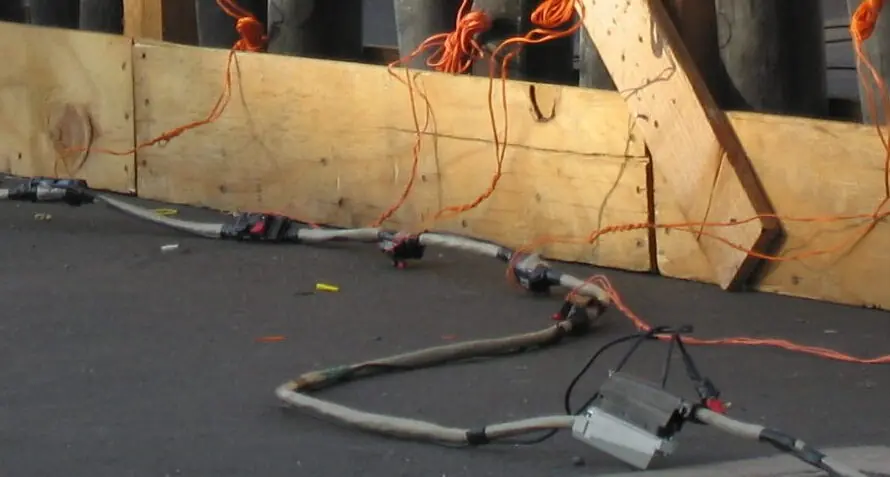
For most analog firing systems, a 25 pair amphenol connector / cable is used. Digital systems can leverage XLR cable and/or two-wire type data connections depending on the design. Some systems have directional cables like XLR, remember, the female always has the power. This means, the female connector on the cable has the power and goes out to the field modules and that the male end plugs into the firing board/controller.
Ground Terminals
Simple screw terminals are standard. Some firing systems are internally grounded through the firing cables and do not require this extra ground line. It is very important to redundantly ground your firing system!
Module Wiring, Cable Coiling, and Cue Sheets
Field Module Wiring
This video provides an overview for wiring up a Pyrodigital field module.

Proper Cable Coiling
Believe it or not, there is a very specific way to wrap cables, watch the video to learn how.

Understanding a Layout and Cuesheet
Learn how to read a Pyrodigital layout and cuesheet.